 Skip to content
| Quick Answer: To get rid of spiders in a Jacksonville home, cut off their food and their hiding places: control the ants, flies and mosquitoes they eat, clear clutter in garages and storage areas, seal gaps around doors and windows, switch off unneeded outdoor lights, and remove webs regularly. Most Jacksonville spiders are harmless; only widow spiders need real caution. Paul’s Termite & Pest Control includes web removal, treatment of hiding spots and an exterior barrier in its recurring pest program, backed by a satisfaction guarantee. Call 904-913-8070 for a free quote. |
Spiders are a common sight in Jacksonville thanks to warm, humid weather and a bug season that runs most of the year. Most of the spiders you see indoors are harmless and even helpful, since they eat other insects, but that does not mean you want webs in the nursery or wolf spiders in the garage. This guide explains why spiders come into Jacksonville homes, which species matter, the quiet, kid- and pet-friendly steps that reduce them, and how professional spider control works when the webs keep coming back.
Why Do Spiders Come Into Jacksonville Homes?
Spiders follow their food. If your home attracts insects such as flies, ants, roaches or mosquitoes, spiders move in to hunt them, and Jacksonville’s climate keeps that prey active nearly year-round. Garages, eaves, sheds, screened porches and cluttered storage areas give spiders the quiet, sheltered spots they prefer. Because spiders are predators, their presence is usually a sign that other insects are around, which is why effective spider control and general pest control go hand in hand.
Which Spiders Are Common in Jacksonville, and Which Ones Matter?
Around Jacksonville homes you will mostly see harmless species:
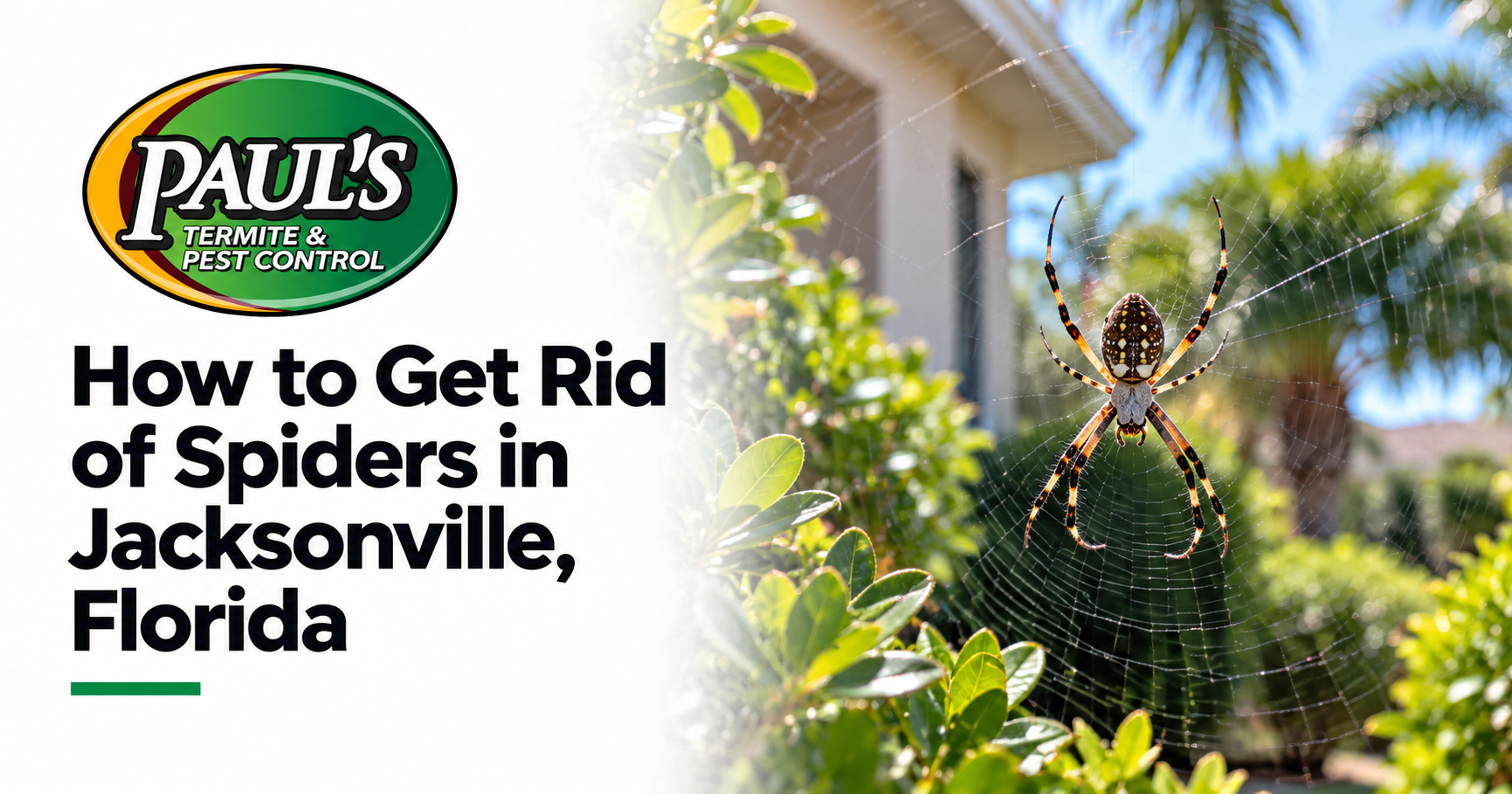
- Orb weavers: the large wheel-shaped webs across porches and gardens, especially in late summer and fall. Harmless and useful.
- Wolf spiders: big, hairy, fast ground hunters that wander in from the yard. Alarming to look at, not dangerous.
- Cellar spiders (daddy longlegs): thin-legged spiders in messy webs in garages and ceiling corners. Harmless.
- Jumping spiders: small, fuzzy and curious, on walls and windowsills in daylight. Harmless.
- Widow spiders: the southern black widow and the brown widow are the two to respect. They hide low in undisturbed spots such as under patio furniture, in meter boxes and in woodpiles. Avoid handling them and keep children and pets away from their webs.
The brown recluse is not established in Florida, despite how often it gets blamed. For a full guide to which Florida spiders are dangerous and how to tell the look-alikes apart, see which spiders in Florida are dangerous.
How Do I Deal With Spiders in My Jacksonville House Without Harsh Chemicals?
You do not have to jump straight to sprays. These quiet, non-chemical habits lower spider activity and make a real difference, especially in homes with kids crawling on the floor and pets nosing into corners:
- Remove webs and egg sacs. Vacuum or dust corners, window frames, baseboards and the undersides of outdoor furniture. Egg sacs look like small cottony balls; vacuuming them prevents dozens of spiderlings.
- Clear clutter. Store toys, sports gear and seasonal items in closed bins instead of open piles. Pull large furniture a little away from walls so you can clean behind it.
- Seal entry points. Repair weatherstripping and door sweeps, fix torn screens, and seal gaps where cables and pipes enter the house. Small gaps let in the insects that spiders follow.
- Manage outdoor lighting. Porch lights draw flying insects, which draw spiders. Turn off unneeded lights or switch to motion sensors, and sweep dead insects away from doors.
- Tidy the yard. Trim shrubs and branches touching the house, and keep woodpiles and debris away from the foundation.
- Shake things out. Outdoor cushions, towels, play tents, garden gloves and shoes left in the garage should be shaken before use.
Skip the home remedies sold as spider repellents. Citrus oil, vinegar and essential oil sprays have little evidence behind them and do nothing about the insects drawing spiders in.
How Do I Safely Remove a Spider I Find Inside?
Most spiders inside a Jacksonville home are harmless and worth relocating rather than killing. Place a glass over the spider, slide a piece of stiff paper underneath, and release it outside away from the house. A long-handled spider catcher does the same job from a distance. The exception is a widow: do not handle it. Vacuum it up, empty the canister into a sealed bag outdoors, and check the surrounding area for the messy, low web and egg sacs.
How Does Professional Spider Control Work in Jacksonville?
Done properly, professional spider control looks nothing like fogging a house. Paul’s uses an Integrated Pest Management approach, and a typical visit works like this:
- Inspection of eaves, window frames, doorways, baseboards, ceilings, garages and any play areas or pet zones you point out, looking for webs, egg sacs and the insects drawing spiders in.
- Web removal from the exterior of the home on every visit.
- Targeted treatment of hiding spots and entry points rather than blanket spraying.
- An exterior protective barrier around the property that reduces both spiders and their prey.
- Recurring visits that maintain the barrier. A single visit removes today’s spiders; ongoing service is what keeps them from coming back.
In most cases you do not need to leave your home, and your technician explains any short-term steps, such as keeping kids or pets off a treated baseboard until it dries. Spider control is part of the recurring pest program described on the Jacksonville pest control page, and if spiders return between scheduled visits, Paul’s re-treats at no charge.
How Do I Keep Spiders Down Around Kids, Pets and Play Spaces?
Certain spots matter more when you have little ones or pets. Paul’s technicians take extra care around cribs, changing tables, play mats, toy baskets, pet beds and food bowls, and they listen to any allergies or sensitivities you share before treating. On your side, a few routines help:
- Wipe window sills and baseboards in bedrooms and play areas on a regular schedule, even when they look clean.
- Keep pet food areas tidy so ants and roaches, and the spiders that follow them, have less reason to visit.
- Check outdoor play equipment and screened porches weekly for webs, especially underneath seats and slides, where brown widows like to build.
- Store stuffed animals and dress-up clothes in closed bins rather than open piles.
UF/IFAS Extension publishes identification guides for Florida spiders at edis.ifas.ufl.edu if you want to confirm what you are seeing. Paul’s has served Jacksonville, Orange Park, Fleming Island and the Beaches from its Middleburg office since 1971, with QualityPro certified technicians and a 4.8-star Google rating.
Frequently Asked Questions
Are the spiders in Jacksonville dangerous?
Most are harmless and eat other insects. The southern black widow and brown widow are the two to avoid handling; both hide low in undisturbed spots such as under outdoor furniture and in meter boxes. Brown recluses are not established in Florida.
Does Paul’s remove spider webs?
Yes. Web removal from the home’s exterior is part of every recurring visit, along with treatment of hiding spots and entry points.
Why do I keep finding spiders even though I clean?
Spiders follow their food. If ants, flies or other insects are present around the home, spiders stay to hunt them. Reducing the broader insect population is what brings spider numbers down.
Is spider control safe around kids and pets?
Paul’s starts with non-chemical steps such as web removal and uses targeted treatments rather than broadcast spraying, with clear guidance on any area to keep clear until it dries. In most cases you do not need to leave the house.
How often is spider control needed in Jacksonville?
Recurring service works best because it maintains the exterior barrier and keeps reducing the insects spiders feed on. The schedule is set after a free inspection based on your home and pest pressure.
Key Takeaways
- Spiders follow their food: controlling ants, flies and roaches is the most effective way to reduce spiders.
- Most Jacksonville spiders are harmless; only black widows and brown widows need caution, and brown recluses are not established here.
- Remove webs and egg sacs, clear clutter, seal gaps, manage outdoor lighting and tidy the yard.
- Relocate harmless spiders with a glass and paper; vacuum widows rather than handling them.
- Professional control means inspection, web removal, targeted treatment and an exterior barrier, maintained on recurring visits.
- Paul’s serves Jacksonville with a satisfaction guarantee. Request a free quote or call 904-913-8070.