 Skip to content
| Quick Answer: Jacksonville’s hurricane season runs from June 1 to November 30, and storms bring mosquitoes breeding in standing water, rodents and wildlife pushed toward homes by flooding, and new gaps from wind damage. Before a storm, clean gutters and seal gaps; after a storm, drain standing water, check for damage and watch for new pest activity. Paul’s Termite & Pest Control serves Jacksonville (904-913-8070). |
Hurricanes and tropical storms are part of life in Jacksonville. The Atlantic hurricane season runs from June 1 to November 30, according to the National Hurricane Center, and even a storm that misses the city can bring days of heavy rain. Pests follow the water. This guide explains which pests surge after a storm in Jacksonville, how to prepare your home before one hits, and what to do in the days and weeks afterward.
Why Do Pests Increase After a Storm?
A big storm changes the environment around your home in three ways that pests take advantage of:
- Standing water gives mosquitoes thousands of new places to breed.
- Flooding drives rodents, wildlife and ants out of their usual shelter and toward dry buildings.
- Wind and water damage lifts shingles, tears screens and opens gaps that let pests inside.
Low-lying neighborhoods and homes near the St. Johns River and its creeks tend to see the most standing water, but any yard with clogged gutters or poor drainage can turn into a breeding ground.
How Do I Prepare My Home for Hurricane Season?
- Clean gutters and downspouts so water drains away from the house.
- Seal gaps around pipes, vents and utility lines.
- Repair torn window and door screens.
- Trim tree branches that hang over the roof, which also keeps squirrels and raccoons off it.
- Store firewood, lumber and debris off the ground and away from the house.
- Keep recurring pest service up to date so a barrier is already in place.
Why Are There So Many Mosquitoes After a Storm in Jacksonville?
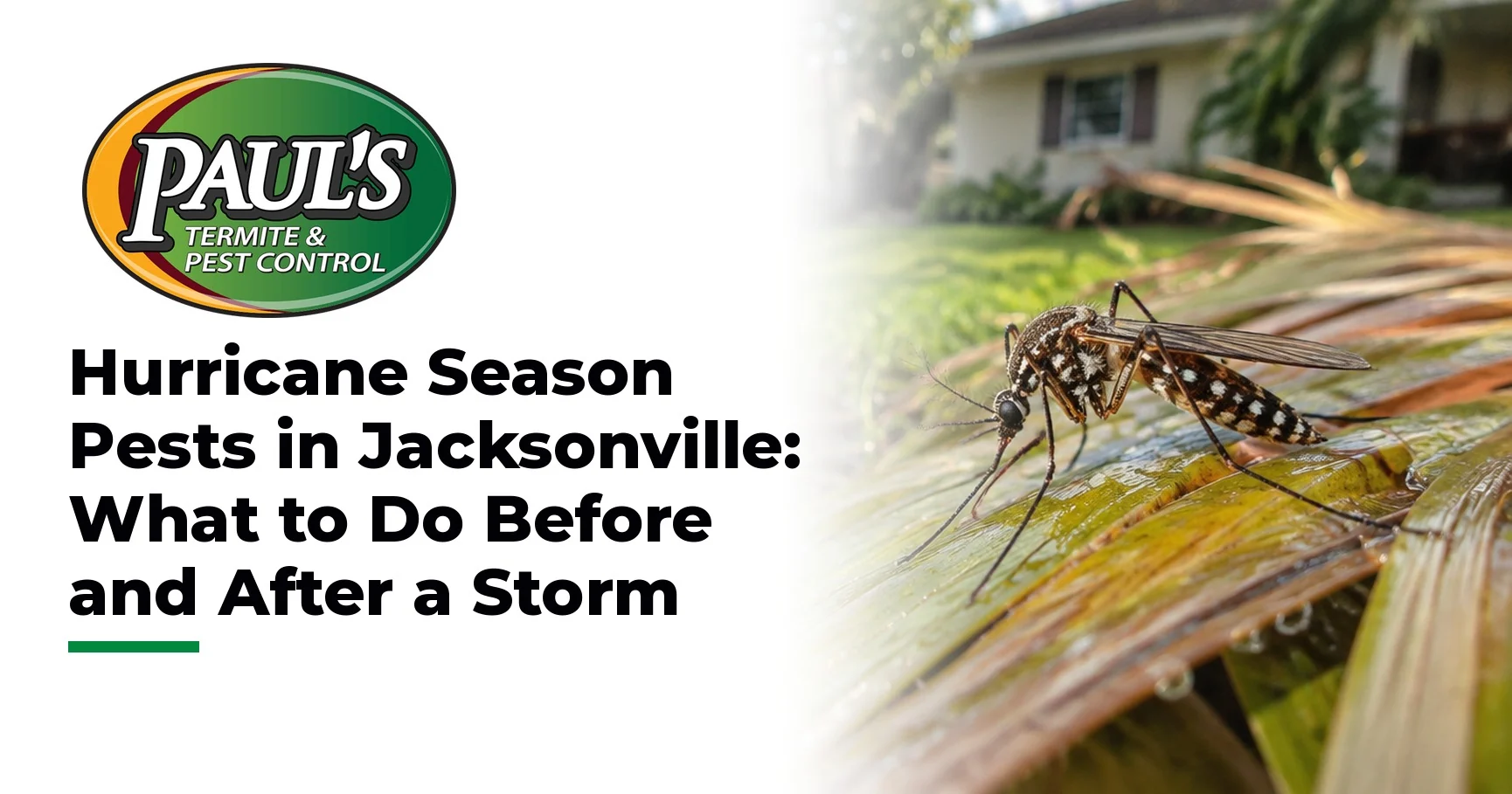
Mosquitoes are the first pest most people notice after a storm. Nuisance mosquitoes hatch right after a storm, and populations can climb sharply in the following weeks as eggs hatch in standing water. According to the CDC’s guidance on mosquitoes and hurricanes, the nuisance mosquitoes that hatch right after a storm generally do not spread viruses, but the types that can spread viruses may increase about 2 weeks after a hurricane, including in areas that got heavy rain without flooding. Drain standing water as soon as it is safe, use repellent and keep screens intact.
Paul’s mosquito treatments in Jacksonville run every month from March through October and target adult mosquitoes, eggs and breeding grounds. See our mosquito control in Jacksonville.
Why Do Rodents and Wildlife Show Up After Flooding?
Flooding pushes rats, mice and wildlife out of burrows, drains and wooded areas, and they look for the nearest dry shelter, which may be your garage, attic or crawl space. In the weeks after a storm, listen for noises overhead, look for droppings and check for new holes in soffits or vents. Storm damage that lets water in often lets animals in too.
Paul’s handles rodent control in Jacksonville and wildlife removal in Jacksonville, pairing removal with closing the entry points so the same route can’t be used again.
Why Do Ants and Roaches Move Indoors After Heavy Rain?
Heavy rain floods ant colonies and the outdoor areas where palmetto bugs live, so both often move indoors after a storm. Fire ants can even float in clumps on floodwater, so take care when cleaning up flooded yards. A treated exterior barrier helps keep them out, and Paul’s recurring pest control in Jacksonville creates a barrier against ants, roaches, spiders and silverfish.
Can Storm Damage Lead to Termites?
Water damage has a longer tail. Wet wood, damp crawl spaces and saturated walls attract moisture-loving pests like roaches and silverfish and make a home more inviting to termites over time. Dry the structure out, remove water-damaged materials and restore drainage. If a storm has left parts of your home damp for weeks, a termite inspection is worth scheduling. Learn more about our termite treatment in Jacksonville.
What Should I Avoid Doing After a Storm?
- Don’t set off foggers or bug bombs in a damp, damaged home. They don’t reach the source and can scatter roaches into walls.
- Don’t try to handle displaced wildlife yourself. Cornered animals may bite or scratch.
- Don’t disturb fire ant clumps or mounds in flooded areas without gloves and boots.
- Don’t leave storm debris piled against the house, where it holds water and gives pests shelter.
- Don’t wait weeks to deal with new holes in the roofline, since animals find them quickly.
What Should I Check After a Storm?
- Walk the property once it is safe and drain or empty anything holding water.
- Clear storm debris that traps water against the foundation.
- Check the roof, soffits, vents and screens for new openings.
- Look and listen for rodents and wildlife in the attic, garage and crawl space.
- Watch for ant and roach activity indoors over the next few weeks.
- Call for help if pests are getting in or the structure stays damp.
Paul’s Termite & Pest Control has served North Florida since 1971 from its Jacksonville-area office at 2561 County Rd. 220 #306 in Middleburg. For the same advice for the whole region, see how to deal with pests after a hurricane or heavy storm in North Florida, and for all of our services, see our pest control in Jacksonville.
Frequently Asked Questions
When is hurricane season in Jacksonville?
The Atlantic hurricane season runs from June 1 to November 30. Heavy rain from tropical storms can bring the same pest problems as a hurricane.
How soon do mosquitoes increase after a storm?
Nuisance mosquitoes hatch right after a storm, and according to the CDC the types that can spread viruses may increase about 2 weeks after a hurricane. Draining standing water quickly is the most effective step.
Why do I see more rats after a hurricane?
Flooding drives rodents out of burrows, drains and wooded areas, and they look for dry shelter in nearby homes. Storm damage often gives them a new way in.
Should I schedule pest control after a storm?
If you see new pest activity, find damage that could let pests in, or have parts of the home that stay damp, it is worth calling. Paul’s serves Jacksonville and the surrounding area.
Does Paul’s offer mosquito control after storms in Jacksonville?
Paul’s mosquito treatments run every month from March through October, covering most of hurricane season. Call 904-913-8070 for a free quote.
Summary
Jacksonville’s hurricane season runs from June 1 to November 30, and every major storm can bring a surge of pests. Mosquitoes breed in standing water, flooding pushes rodents and wildlife toward homes, and heavy rain drives ants and roaches indoors. Preparing before the season and walking the property after each storm limits the damage. Long-term dampness from storm damage also raises the risk of termites, so drying the structure out matters.
Ready to get started? Call Paul’s Termite & Pest Control at 904-913-8070 or request your free quote online.
Key Takeaways
- Jacksonville’s hurricane season runs from June 1 to November 30.
- Storms bring a surge of mosquitoes, displaced rodents and wildlife, and indoor ants and roaches.
- Before a storm, clean gutters, seal gaps, repair screens and trim branches.
- After a storm, drain standing water, check for new openings and watch for pest activity.
- Long-term dampness raises the risk of termites and moisture-loving pests.
- Paul’s serves Jacksonville homes year-round. Request a free quote.