 Skip to content
| Quick Answer: Only the widow spiders are dangerous in Florida: the southern black widow, northern black widow, red widow and brown widow. The brown recluse is not established in Florida, and the spiders most people see, including wolf spiders, orb weavers, jumping spiders, cellar spiders and false widows, are harmless and eat other pests. Widows hide in quiet, cluttered spots such as garages, sheds, woodpiles and meter boxes. Paul’s Termite & Pest Control has reduced spiders and the insects they feed on in Tallahassee and Jacksonville homes since 1971. Call 850-222-6808 (Tallahassee) or 904-913-8070 (Jacksonville). |
Spiders top a lot of people’s pest fears, but in Florida the reality is reassuring: almost all of them are harmless, and many are quietly useful, eating roaches, flies and other insects. Only a small group warrants caution. This guide covers which Florida spiders are dangerous, how to tell them from the common look-alikes you are far more likely to meet, where the risky ones hide, what a bite can do, and how to keep spiders out of your North Florida home.
Which Spiders in Florida Actually Warrant Caution?
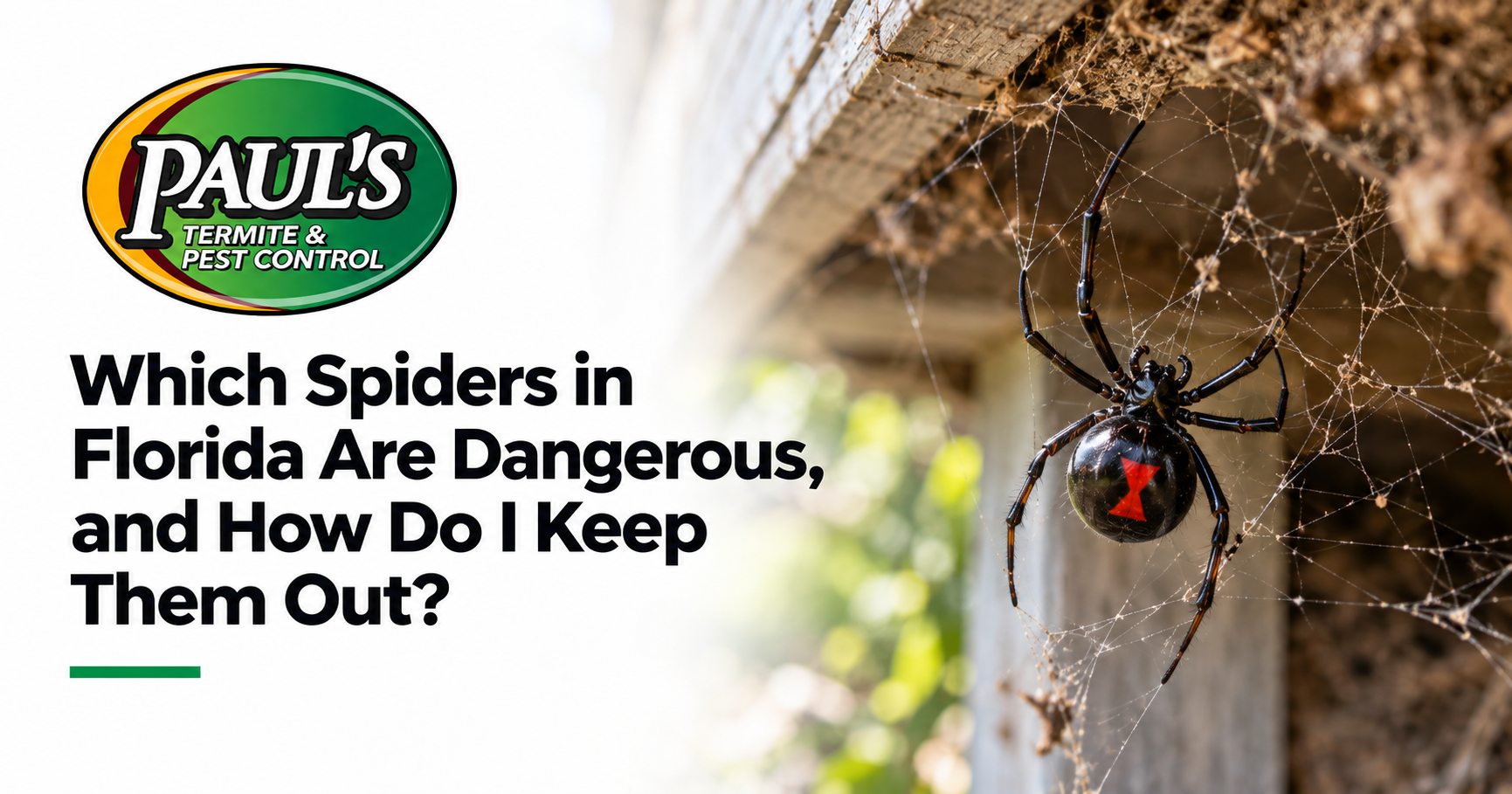
Florida is home to four venomous widow species: the southern black widow, the northern black widow, the red widow and the introduced brown widow. The southern black widow is the most familiar: glossy black with the red hourglass on the underside of the abdomen. The northern black widow has a broken hourglass and a row of red spots along the top of the abdomen. The red widow is reddish-orange with a black abdomen and lives mainly in scrub habitat. The brown widow is tan to brown with an orange hourglass and is now common around homes, where it builds webs under outdoor furniture, railings and eaves.
All four can deliver a medically significant bite, so these are the spiders to respect and avoid handling. UF/IFAS reports that the southern black widow is responsible for most venomous spider bites in Florida, and that all the widows except the northern black widow breed year-round here.
Are Brown Recluse Spiders in Florida?
No, not in any established way. The brown recluse is not native to Florida and has not formed breeding populations in the state. UF/IFAS entomologists report only about 20 verified recluse specimens ever found in Florida, all in buildings or vehicles, never in native habitat, so the odds of meeting one are very slim. UF/IFAS also notes that up to 80 percent of suspected recluse bites are likely staph infections rather than spider bites. The full explanation is at UF/IFAS: Are there brown recluse spiders in Florida?.
Knowing this lets you focus your caution on widows, which are present, rather than on a spider that almost certainly is not.
Which Common Florida Spiders Are Harmless Look-Alikes?
Most calls about “dangerous” spiders turn out to be one of these. Each is harmless to people and useful around the house:
- False black widow: a cousin of the black widow that is brown rather than black and has no red hourglass. Its bite is unlikely to cause more than brief soreness.
- Wolf spider: large, hairy, fast and ground-hunting. Wolf spiders do not build snare webs and wander indoors from garages, sheds and lawns, especially in fall. They look alarming but are not dangerous. The hair on the body is one easy way to rule out a recluse, which is smooth.
- Southern house spider: the spider UF/IFAS names as the one most often mistaken for a recluse in Florida, especially the lighter-colored males. It builds flat, radiating webs around window frames, shutters and eaves and is harmless.
- Funnel weaver: a hairy brown spider that builds a sheet web with a funnel-shaped retreat in grass and shrubs. Often mistaken for a recluse; it is not one.
- Orb weaver: the builder of the large wheel-shaped webs that appear across doorways and gardens overnight in late summer and fall. Shy and beneficial.
- Jumping spider: small, fuzzy and curious, hopping along walls and windowsills in daylight. Harmless.
- Cellar spider (daddy longlegs): long-legged and found in messy webs in garages and corners. Poses no threat to people.
A single orb weaver on a porch can take out dozens of mosquitoes and flies over a season. Unless a spider is a widow or is somewhere it poses a hazard, the calmer response is to leave it or relocate it outside.
What Can a Widow Bite Do?
Widow venom affects the nervous system. A bite can lead to muscle cramps and pain in the abdomen, back and limbs, sometimes with sweating and nausea, usually beginning within 15 minutes to 3 hours of the bite. Reactions vary with the person and the amount of venom. Widows are not aggressive; most bites happen when a spider is pressed against skin, such as reaching into a dark corner or pulling on a stored glove or shoe. If you are bitten and develop spreading pain or feel unwell, seek medical care and, if you can do so safely, keep the spider for identification.
Where Do Dangerous Spiders Hide Around Florida Homes?
Widows like quiet, undisturbed, sheltered spots: garages, sheds, crawlspaces, woodpiles, outdoor furniture, meter boxes, grill covers, and clutter along the foundation. They build irregular, messy webs low to the ground. Brown widows in particular favor the undersides of patio chairs, playground equipment and mailbox posts. Knowing these spots tells you where to be careful: wear gloves when moving stored boxes, firewood or pots, and shake out shoes and gloves that have sat in the garage.
How Do I Keep Spiders Out of My Florida Home?
Spider control is mostly about habitat and prey. The steps that make the biggest difference:
- Reduce clutter in garages, sheds and closets so there are fewer hiding spots.
- Seal cracks, gaps and torn screens where spiders and their prey enter.
- Keep woodpiles, debris and dense ground cover away from the foundation.
- Knock down webs when you see them, including under outdoor furniture.
- Switch porch lights off when not needed or use motion lights; lights draw the insects spiders eat.
- Control the other insects in and around your home. Removing the food supply is why ongoing pest control reduces spider activity as a side effect.
Paul’s recurring pest program treats the exterior perimeter, removes webs and targets the harborage areas where spiders and their prey live, in both the Tallahassee and Jacksonville markets. The pest control services page lists what the program covers, and the areas we service page lists the communities.
What Should I Do If I Am Bitten by a Spider?
Most spider bites in Florida are minor and heal with basic first aid: clean the area, apply a cold compress and watch it. The picture is different with a suspected widow bite. If you develop spreading muscle pain and cramping in the abdomen, back or limbs, sweating, or nausea, seek medical care, and if you can do so safely, capture or photograph the spider. Anyone with a severe reaction, or a bite in a very young child or older adult, should be evaluated promptly. Keeping the spider, even crushed, in a bag for identification helps a clinician judge whether a bite needs more than basic care.
Frequently Asked Questions
Are most Florida spiders dangerous?
No. The large majority are harmless and even beneficial. Only the widow species (southern black, northern black, red and brown widow) warrant real caution.
Do we have brown recluses in Florida?
They are not native and have not established breeding populations here. Encounters are rare, and many suspected recluse bites are something else.
How do I tell a wolf spider from a brown recluse?
Wolf spiders are hairy, larger and fast-moving; recluses are smooth with a violin mark. In Florida, a large hairy brown spider is almost always a wolf spider or funnel weaver.
Should I kill spiders I find?
Usually not. Harmless spiders help control other pests. Focus on widows and on spiders in hazardous spots such as children’s play areas, and relocate the rest outdoors.
Can pest control help with spiders?
Yes. Reducing their insect prey, removing webs and treating harborage lowers spider activity. Call Tallahassee 850-222-6808 or Jacksonville 904-913-8070 for a free quote.
Key Takeaways
- Only widow spiders are dangerous in Florida: southern black, northern black, red and brown widows.
- The brown recluse is not established in Florida; large hairy brown spiders are wolf spiders or funnel weavers.
- Orb weavers, jumping spiders, cellar spiders and false widows are harmless and eat other pests.
- Widows hide in garages, sheds, woodpiles, meter boxes and under outdoor furniture; wear gloves and shake out stored items.
- Reduce clutter, seal entry points, manage outdoor lighting and control other insects to keep spiders out.
- Paul’s has served Tallahassee and Jacksonville since 1971. Request a free quote.