 Skip to content
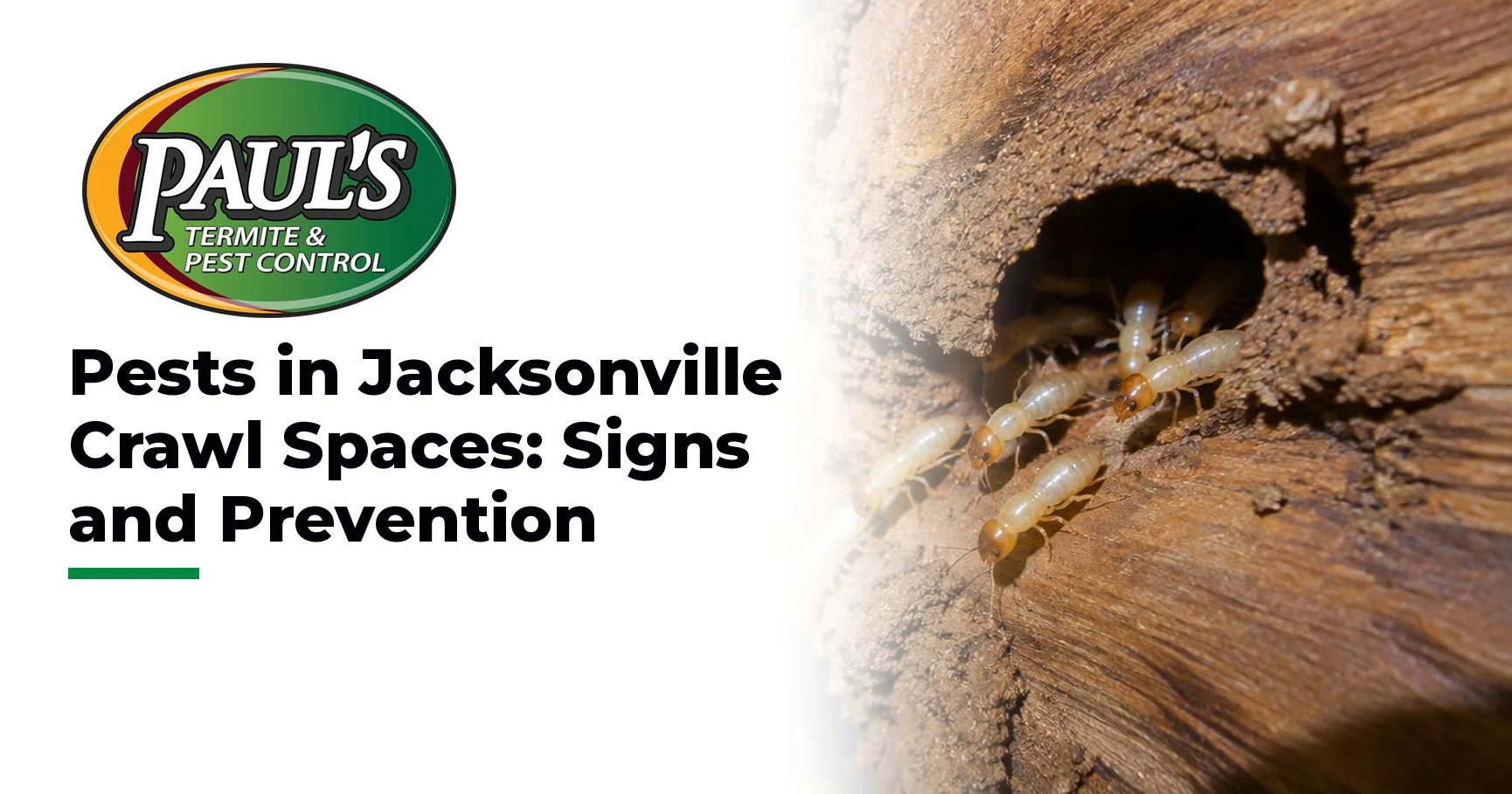
| Quick Answer: Crawl spaces under Jacksonville homes are dark, damp and rarely checked, which makes them a favorite spot for subterranean termites, rodents, roaches, silverfish and wildlife. Warning signs include mud tubes, soft wood, droppings, nesting material, musty odors and standing water. Keep the crawl space dry, seal openings and have it inspected; Paul’s Termite & Pest Control serves Jacksonville (904-913-8070). |
Most homeowners rarely look in their crawl space, and pests take advantage of that. In Jacksonville, warm temperatures, high humidity and a high water table can keep the soil under a home damp for much of the year. Add limited airflow, wooden supports and openings to the outside, and a crawl space can give pests everything they need. This guide covers the pests most often found in Jacksonville crawl spaces, the signs to look for, and how to keep the space under your home protected.
Why Do Pests Like Crawl Spaces?
A crawl space gives pests three things: moisture, shelter and access to the house. Damp soil and humid air support termites and moisture-loving insects. Darkness and quiet make it a safe place for rodents and wildlife to nest. And pipes, wiring and ductwork that pass through the floor give pests a path into the living space above.
Which Pests Are Found in Jacksonville Crawl Spaces?
Subterranean Termites
Subterranean termites live in the soil and travel through mud tubes to reach wood. Crawl spaces are one of their favorite entry points because the soil, the moisture and the wooden supports are all in one place. Formosan termites, also found in the Jacksonville area, are especially drawn to moisture.
Rodents
Norway rats often nest in crawl spaces and burrows near the foundation, and mice can squeeze through very small gaps. Once under the house, they can move into wall voids and chew insulation, wiring and ductwork.
Roaches
American cockroaches, known locally as palmetto bugs, like dark, damp places and often live in crawl spaces before moving up through plumbing gaps into kitchens and bathrooms.
Silverfish and Springtails
Both thrive in high humidity. A crawl space with poor ventilation or a leak can support large numbers of them, and they often show up in the bathrooms and laundry rooms above.
Wildlife
Opossums, raccoons and other animals may use a crawl space as a den, especially if a vent cover or access door is damaged. They can tear insulation and ductwork and bring fleas with them.
What Are the Signs of Pests in a Crawl Space?
- Mud tubes on foundation walls, piers, plumbing lines or HVAC lines, a sign of subterranean termites.
- Soft, crumbling or hollow wood on beams, joists or subflooring.
- Sagging or uneven floors in the rooms above.
- Droppings, gnaw marks or nesting material.
- Torn or fallen insulation or damaged ductwork.
- A musty or unusual odor coming up through floors or vents.
- Standing water, leaking pipes or a damaged vapor barrier that keeps humidity high.
- Damaged or missing vent covers or a crawl space door that doesn’t close.
For a full termite checklist that covers the crawl space, attic, garage and exterior, see our Jacksonville termite inspection guide.
Is It Safe to Check My Own Crawl Space?
A quick look from the access door with a flashlight is a good habit. Going all the way in is a different matter. Crawl spaces can have sharp objects, exposed wiring, standing water and animals that may bite if cornered. If you hear or smell signs of an animal, or you see damage you can’t reach, leave it to a professional.
How Do I Keep Pests Out of My Crawl Space?
- Fix plumbing leaks right away and make sure AC condensate lines drain away from the house. The EPA recommends keeping the soil around the foundation dry and sealing cracks and utility openings to reduce termite access.
- Keep gutters and downspouts clear and directing water away from the foundation.
- Repair or replace damaged vent covers and keep the access door closed and secure.
- Check that any vapor barrier covers the soil and is not torn.
- Remove wood scraps, cardboard and debris from under the house.
- Keep mulch and soil from piling up against the foundation and siding.
- Seal gaps where pipes and wiring pass through the floor. According to the CDC, a mouse can fit through a hole the width of a pencil, about 1/4 inch.
How Does Paul’s Handle Crawl Space Pests in Jacksonville?
The right approach depends on what the inspection finds:
- Termites: Paul’s provides termite inspections, treatment and ongoing monitoring using the Sentricon Colony Elimination System instead of tent fumigation. Every termite agreement lasts at least one year and includes re-treatments if there is still termite activity between services. See our termite treatment in Jacksonville.
- Rodents: Paul’s rodent control in Jacksonville removes the rodents and closes the entry points.
- Wildlife: Paul’s wildlife removal in Jacksonville includes humane removal and closing the openings so the same route can’t be used again.
- Roaches and other insects: Paul’s recurring pest control creates a barrier against ants, roaches, spiders and silverfish.
When Should I Call a Professional?
Call if you find mud tubes or damaged wood, hear animals under the floor, notice a musty smell that won’t go away, or see roaches or silverfish coming up through plumbing gaps. Paul’s Termite & Pest Control has served North Florida since 1971 and serves Jacksonville from its Jacksonville-area office at 2561 County Rd. 220 #306 in Middleburg. See our pest control in Jacksonville for all of our services.
Frequently Asked Questions
What pests live in crawl spaces in Jacksonville?
The most common are subterranean termites, rats and mice, palmetto bugs, silverfish, springtails, and wildlife such as opossums and raccoons.
How do I know if termites are in my crawl space?
Look for mud tubes on foundation walls, piers and pipes, and for soft or hollow wood on beams and joists. A professional termite inspection confirms it.
Why does my crawl space smell musty?
Usually moisture: a leak, poor drainage or high humidity. A musty smell can also come from animals or droppings. Find and fix the source, and have the space checked if you suspect pests.
Can an animal be living under my house?
Yes. Opossums, raccoons and rats can get in through damaged vents or access doors. Don’t try to remove them yourself. Paul’s handles wildlife removal and closes the entry points.
Does Paul’s inspect crawl spaces for termites in Jacksonville?
Paul’s provides termite inspections, treatment and ongoing monitoring in Jacksonville. Call 904-913-8070 to schedule a free termite inspection.
Summary
Crawl spaces under Jacksonville homes stay damp and dark, which attracts subterranean termites, rodents, palmetto bugs, silverfish and wildlife. Mud tubes, soft wood, droppings, torn insulation and musty odors are the main warning signs. Keeping the crawl space dry and sealing vents, access doors and utility gaps are the most important prevention steps. Regular termite inspections catch activity before it spreads into the structure.
Ready to get started? Call Paul’s Termite & Pest Control at 904-913-8070 or request your free quote online.
Key Takeaways
- Jacksonville crawl spaces stay damp, which attracts termites and moisture-loving pests.
- Mud tubes, damaged wood, droppings and musty odors are the main warning signs.
- Keeping the crawl space dry is the most important prevention step.
- Damaged vents and access doors let rodents and wildlife in.
- Regular termite inspections catch problems before they spread.
- Paul’s serves Jacksonville homes. Request a free quote.