 Skip to content
| Quick Answer: To schedule a termite inspection in Jacksonville, call Paul’s Termite & Pest Control at 904-913-8070 or request a free quote online. Our certified inspectors check for active and past termite activity and recommend treatment if needed. |
Why do Jacksonville homes need termite inspections?
Florida has one of the highest termite risks in the country, and Jacksonville’s humidity makes homes especially attractive to subterranean termites. An inspection catches activity early, when treatment is simplest and least expensive.
Many homeowners don’t realize they have termites until damage appears, which is exactly why routine inspections matter.
Florida’s combination of warmth, humidity, and abundant wood makes it one of the most termite-active states in the country. For Jacksonville homeowners, this means termites aren’t a remote possibility but an ongoing risk, which is exactly why routine inspections are considered standard practice rather than an optional extra. Explore our termite treatment services to learn more.
What happens during a termite inspection?
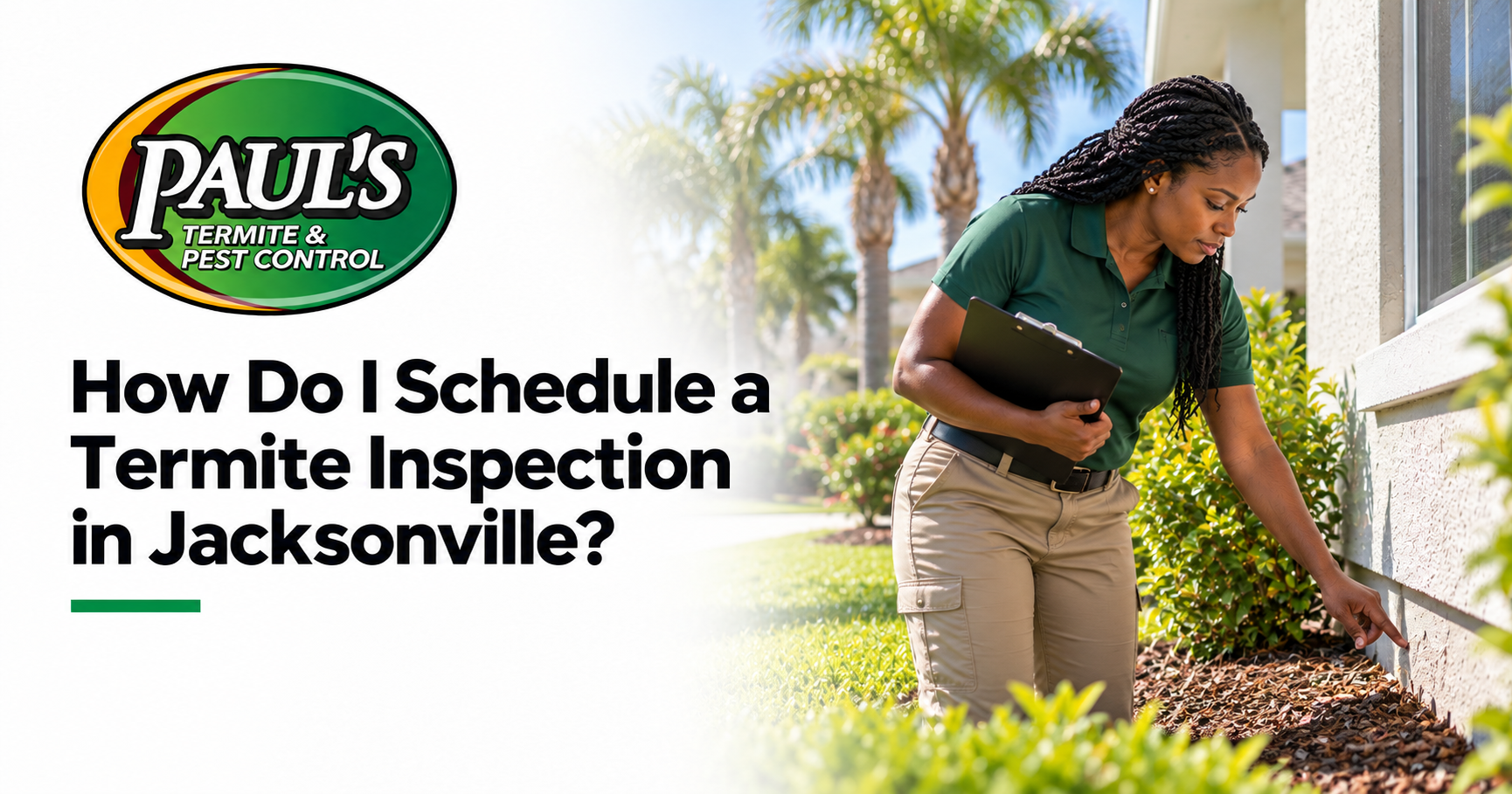
A trained inspector examines the areas termites are most likely to enter and hide, then explains the findings clearly. A typical inspection covers:
A professional inspection is also valuable when buying or selling a home. Many real estate transactions in Florida involve a wood-destroying organism inspection, and having a recent, clean report can smooth the process and give buyers confidence. For more background, see UF/IFAS subterranean termite resources.
- The foundation and exterior perimeter for mud tubes.
- Crawl spaces, attics, and accessible wood structures.
- Window and door frames for discarded wings.
- Moisture-prone areas that attract termites.
- Signs of past treatment or prior damage.
How often should you get inspected?
For Florida homes, an annual termite inspection is the standard recommendation. If your home has a history of termites or sits in a high-moisture area, more frequent checks may be wise.
Routine inspections are an inexpensive way to avoid one of the most costly home repairs there is.
The frequency that’s right for you depends on your home’s history and surroundings. A property with previous termite activity, nearby wooded areas, or persistent moisture issues may benefit from more frequent checks than a low-risk home.
What if termites are found?
If the inspector finds activity, Paul’s will recommend a treatment plan tailored to your home and back it with a guarantee. We focus on eliminating the colony and preventing future infestations.
Catching the problem early often means a simpler, more affordable solution.
How should you prepare for a termite inspection?
You don’t need to do much, but a few small steps help the inspector access the areas termites favor. Clearing access to the garage, crawl space, attic entry, and the perimeter of your home lets the inspection be as thorough as possible.
Moving stored items away from interior walls and foundation areas also helps, since termites often travel along these hidden paths.
- Clear access to crawl spaces, the attic entry, and the garage.
- Move stored items away from foundation walls.
- Note any areas where you’ve seen moisture or possible activity.
- Trim vegetation touching the home’s exterior.
Why are annual inspections worth it for Florida homes?
Termite damage is one of the few home repairs that homeowners’ insurance typically won’t cover, because it’s considered preventable through maintenance. That alone makes an annual inspection one of the most cost-effective safeguards a Florida homeowner can invest in.
An inspection catches activity while it’s still small and inexpensive to address, long before termites compromise structural wood. Given Jacksonville’s high termite pressure, the question isn’t really whether termites are nearby, it’s whether you’ll find them early.
Routine inspections also create a documented history of your home’s termite status, which is valuable if you ever sell. For a modest yearly investment, you protect what is likely your largest asset. Explore our pest control in Jacksonville to learn more.
- Termite damage is usually not covered by home insurance.
- Early detection means simpler, cheaper treatment.
- Jacksonville’s pressure makes activity a real ongoing risk.
- Inspection history adds value when selling.
Attic Termite Inspection Essentials
The attic is often one of the first places drywood termites show up. After summer swarms and long rainy stretches, they can slip in through vents, gaps in the roof, or around wiring and settle in the dry wood overhead. Since you probably do not go up there very often, early signs are easy to miss.
During your attic check, watch for:
- Small sand-like droppings (called frass) on rafters, in insulation, or piled in corners
- Tiny “kick-out” holes in wood or drywall, often with a little pile of pellets below
- Blistered or bubbling paint on ceiling areas that suggests damage under the surface
- Discarded wings along beams, near vents, or around light fixtures
Try to inspect the attic in cooler parts of the day so you are more comfortable. Use a bright flashlight and watch your step, staying on joists so you do not damage the ceiling below. If you see anything that looks like termite activity, do not scrape, vacuum, or break it open. Take clear photos of what you see, then let a professional inspection confirm what is going on before anything is disturbed.
Crawl Space and Under-Home Trouble Spots
Crawl spaces under Jacksonville homes are a favorite hangout for subterranean termites, which are termites that live in the soil and travel through mud tubes. Moist soil, limited airflow, and wooden supports give these termites the steady dampness and food they want. Since this area is out of sight, a problem can grow for a long time before you notice sagging floors inside.
When you check your crawl space, watch for:
- Mud tubes on foundation walls, piers, plumbing lines, or HVAC lines
- Soft or crumbling wood on beams, joists, or subflooring
- Sagging or uneven floors when viewed from below
- Rusted metal supports or brackets that stay damp
- Standing water, leaky pipes, or damaged vapor barriers that keep humidity high
If something looks off, it is smart to have a professional termite inspection in Jacksonville to get a closer look. Simple moisture fixes like improving drainage or adjusting vents can help, but you still want a trained eye checking for hidden termite paths and damage. For homes near the coast, pairing this with regular pest control support around Jacksonville Beach can be a smart step.
Garage Hotspots You Should Never Ignore
Garages often become termite hotspots without you noticing. Small slab cracks, stored cardboard, and piles of extra lumber bring moisture and wood together in one place. Since many people treat the garage like a storage unit, termites can snack there quietly for a long time.
During your garage walk-through, check:
- Expansion joints and slab cracks for mud tubes or small piles of frass (termite droppings)
- Baseboards, door frames, and the bottom of walls for bubbling or peeling paint
- Wood that sounds hollow or papery when tapped lightly
- Tiny exit holes around the inside of the garage door or trim
- Boxes, lumber, and furniture sitting directly on the floor or pressed against walls
A few habit changes go a long way. Try to store items on plastic or metal shelving instead of directly on the floor. Keep firewood, scrap wood, and yard tools with wooden handles stored outside and off the ground when possible, since keeping wood and moisture away from the structure is a core termite prevention step. Sealing gaps around the garage door and side entries helps keep moisture and pests out, and also works well with a broader pest control plan for your Jacksonville home.
Exterior Perimeter Check for Jacksonville Homes
Your outside inspection is your first line of defense. Most termite problems start at the soil and slowly work inward. With our rainy late summer and fall, damp areas around the foundation can stay attractive to termites for long stretches.
Take a slow walk around your home and check:
- Foundation walls and slab edges for mud tubes, cracks, and any wood touching soil
- Mulch beds, tree stumps, fences, and landscape timbers for soft, damaged, or hollow spots
- Deck posts and steps that go straight into the ground
- Gutters, downspouts, and irrigation that spill water close to your house and keep soil soggy
As you move into September, it is a good time to clean up storm debris and trim shrubs away from siding so you can see the walls clearly. Try to keep mulch a few inches away from the foundation so you do not hide termite activity. If you spot tubes, strange damage, or anything that just does not look right, it can be helpful to bring in a local company familiar with termite treatment in North Florida to check things more closely.
Frequently Asked Questions
Is a termite inspection free?
Paul’s offers free quotes. Call 904-913-8070 to discuss scheduling an inspection for your Jacksonville home.
How long does an inspection take?
Most home inspections take under an hour, depending on the size and layout of the property.
Do I need an inspection if I see no termites?
Yes. Termites often go unseen until damage occurs, so routine inspections are the best way to catch them early.
What happens if the inspection finds termites?
Paul’s will explain the type and extent of activity and recommend a treatment plan suited to your home, backed by a guarantee. Catching activity early usually means a simpler, more affordable solution.
Can I Treat Termites Myself with Store-Bought Products?
Store-bought products may kill a few visible termites, but they rarely reach the main colony, so hidden damage can continue even when it looks like the problem is gone.
Are Termite Inspections Messy or Destructive to My Home?
A standard termite inspection is non-destructive and mainly visual, using tools like flashlights and moisture meters without opening walls or flooring.
Does Paul’s Offer a Guarantee on Termite Treatments?
Yes, Paul’s Termite and Pest Control backs termite services with a satisfaction guarantee and offers ongoing protection options to help keep your home covered year-round.
Is a termite inspection worth it if I’ve never seen termites?
Yes. Subterranean termites work out of sight and are often discovered only after damage appears, so a routine inspection is the most reliable way to catch them early in a high-risk Florida market like Jacksonville.
Ready to protect your home? Call Paul’s Termite & Pest Control today at 904-913-8070 or request your free quote online. Serving Jacksonville and the surrounding area since 1971, with a satisfaction guarantee on every visit.