 Skip to content
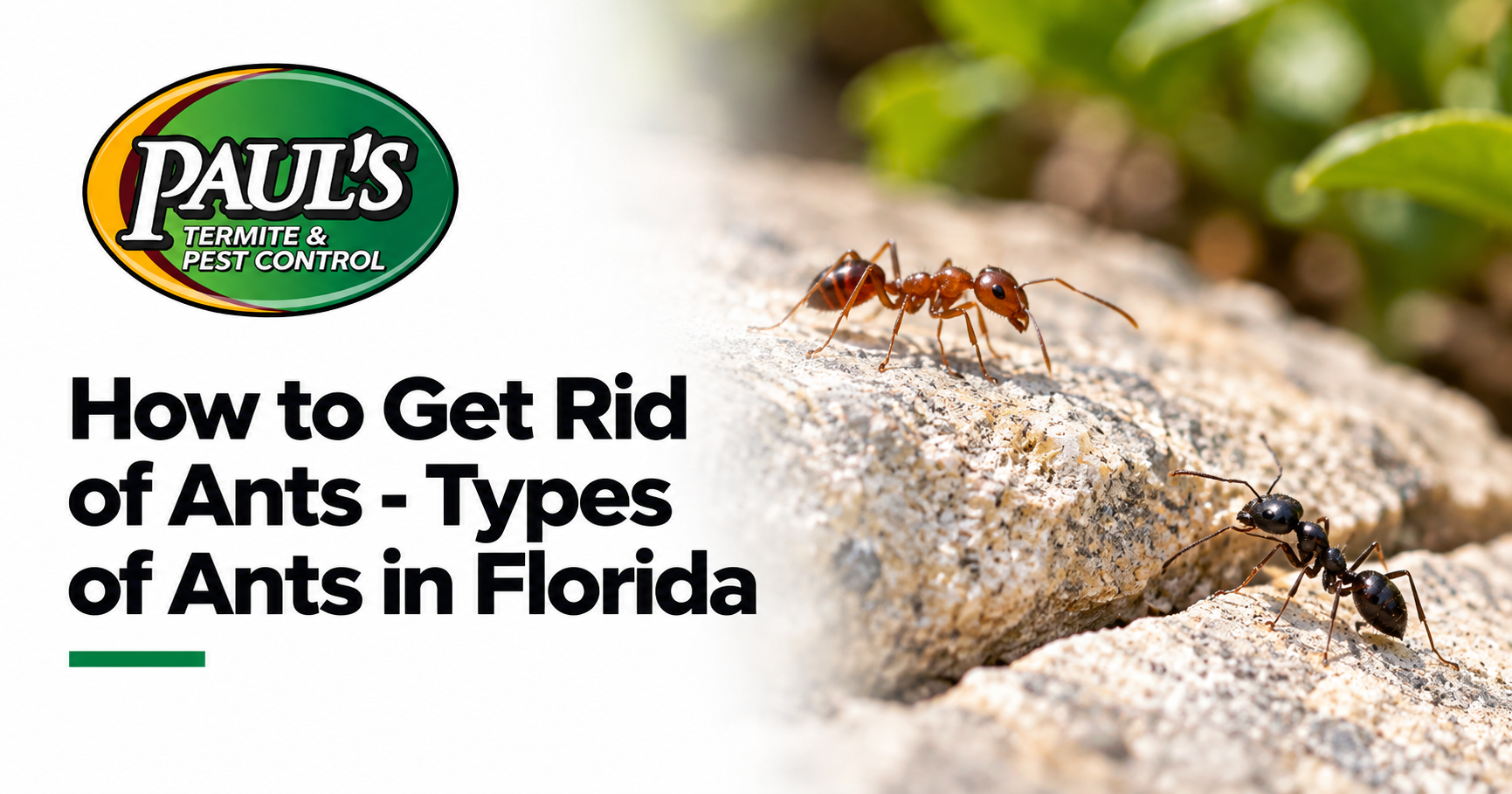
Living in Florida has a lot of benefits: great weather, great people, and lots to do. But one of the major problems we have in Florida is ants. Somehow these small insects are able to find ways into almost any home. Learn about the types of ants in Florida as well as different ways to get rid of ants.
Common Types of Ants in Florida
There are hundreds of ant species worldwide, with many of them residing in the sunshine state, so it can be easy to get the many kinds of ants in Florida confused. Many of these ants have different nicknames depending on where you are located geographically. Here are the most common types of ants in Florida:
Tiny Ants or Sugar Ants
The tiny ants you typically see in your kitchen are sugar ants. These tiny ants are harmless to humans but dangerous to food. They’re attracted to carbs and sweets, meaning they will more than likely help themselves to your pantry or cabinets. Sugar ants can also be found in dishwashers if you do not keep the door tightly closed. If you’re looking for how to get rid of sugar ants in your kitchen, see our section on DIY ant control.
Red Ants or Fire Ants
The red ants that you commonly see in your yard or garden are fire ants. Fire ants are one of the Florida ants that bite, causing itchy welts and painful marks even if you’re not allergic to them. Red ants in Florida can sting multiple times, and they will even sting without feeling threatened. This makes red ants some of the most irritating and even dangerous types of ants!
Carpenter Ants or Bull Ants
Carpenter ants may also be known as bull ants. These ants search for voids where they can nest, or excavate soft materials like rotten wood or styrofoam. Bull ants in Florida can be black, red, or a combination of the two. Bull ant bites are especially painful, so it’s important to take care when dealing with them.
Ghost Ants
Ghost ants have a dark head and a light-colored, or translucent, body. They’re fast, smaller than most ants, and have a keen sense of smell. They’ll try and attack any sweet foods left unsealed, and their teeth are sharp enough to break through food packaging. Ghost ants can bite, but only if they feel threatened.
Pharaoh Ants
Pharaoh ants might be the worst ant to find in your home. It takes professional treatment to get rid of pharaoh ants because they can survive through most conventional household or DIY pest treatments. These ants like sweet, fatty, and oily foods. Pharaoh ants can be yellowish or red in color. Pharoah ant bites can be incredibly painful, but they are not poisonous. Similar to ghost ants, Pharaoh ants only bite if they feel threatened.
Bigheaded Ants
Bigheaded ants are an invasive species here in the US that is common in warm, humid climates, which is why they love Florida! As the name suggests, these ants have disproportionally large, heart-shaped heads. They do not bite unless they feel threatened, but they can still be a nuisance for homeowners. Bigheaded ants will contruct mud tubes outside of your home, which can be confused for termite activity. These colonies are also tremendously large, which can make them difficult to get rid of.
How to Get Rid of Florida Ants
You may be able to get rid of ants in Florida with these ideas:
- Cornmeal – tiny ants are attracted to cornmeal and will want to eat it, but their bodies can’t digest it. Any ant that eats cornmeal will die, so sprinkle it where you see ants inside or near the colony outside if you know where they live.
- Vacuum – Use a vacuum or dust-bust the ants when you see them, then sprinkle some talcum powder and vacuum that up as well. The talcum powder will make sure they die inside the vacuum instead of just giving them a new home.
- Borax – Take 1 tablespoon of peanut butter, 2 tablespoons of borax, 1 teaspoon of water, and mix well. Spread this mixture on pieces of cardboard and place them where you see ants. Most types of ants in Florida will carry it back to the nest, and the other ants will die from the borax after eating it. Don’t use this mixture near infants or pets.
- Dish soap – Mix dish soap, water, and some rubbing alcohol in a spray bottle and spray it on any type of ants you see. This will kill them quickly and effectively.
- Boiling water – If you know where the ant colony lives, or if you’re able to follow them back to their nest, pour boiling water down into the hole. This should wipe out the colony. Be careful not to scald yourself and to avoid any agitated ants as they flee from the nest.
Why spraying the trail backfires
Reaching for a can of spray feels satisfying, but with many ant species it makes things worse. Contact sprays kill the visible foragers while leaving the queen and brood untouched, and some species respond to being sprayed by “budding”, splitting into multiple new colonies that scatter through the house. You end up with more trails in more rooms. The goal is not to kill the ants you can see; it is to eliminate the colony you cannot.
How baiting actually solves it
Baiting works because it uses the ants’ own behavior against them. Workers carry the bait back to the nest and share it with nestmates, including the queen, through food exchange, so the active ingredient reaches the part of the colony you can never reach with a spray. The trade-off is patience: you may briefly see more ants as they recruit to the bait, and it can take days to weeks to collapse a colony. Resisting the urge to spray the baiting ants is essential, since spraying kills the carriers before they deliver the dose.
The prevention that keeps them out
Long-term ant control is mostly about denying access and resources. Wipe up crumbs and spills promptly, store food and pet food in sealed containers, take out the trash regularly, and fix leaks and damp spots that give ants water. Outside, trim shrubs and tree limbs away from the house, keep mulch a few inches back from the foundation, and seal the cracks, gaps, and utility penetrations ants use to get in. These steps will not erase an established colony on their own, but they make your home far less attractive and keep a treated home clear.
Seasonal ant patterns in North Florida
Ant activity shifts with the weather, and knowing the rhythm helps you stay ahead of it. Spring’s warming temperatures wake colonies up and trigger foraging, which is when many homeowners notice the first trails of the year. Summer is peak season: heavy rains repeatedly flood outdoor nests and drive ants indoors looking for dry ground, while dry stretches send them inside hunting for water around sinks, tubs, and pet bowls, so you can get pushes from both wet and dry weather. Fall brings a second surge as colonies forage to stock up before cooler months, and even our mild winters keep many species active indoors, where it stays warm and food is available. Because there’s no hard freeze here to reset the cycle, ants are essentially a year-round consideration in Tallahassee, Orange Park, and the surrounding towns. That’s exactly why a one-time treatment so often disappoints: it may clear the current trail, but the next weather swing brings a fresh wave from a colony that was never touched. Matching prevention and treatment to these seasonal pushes is far more effective than reacting after the ants are already on the counter.
Frequently Asked Questions
Why do ants keep coming back after I clean?
Because cleaning removes the trail, not the colony. Until the nest is treated and entry points and food sources are addressed, foragers keep returning.
Are ant treatments safe for kids and pets?
Professional products are EPA-reviewed and applied as targeted baits and crack-and-crevice treatments rather than broad sprays. Your technician will note any short drying or keep-away time.
Should I spray the ants I see?
Usually no. With many species, spraying kills foragers but spares the queen and can cause the colony to split. Baiting is more effective.
How long does it take to get rid of ants?
Baiting typically works over days to a couple of weeks as the colony consumes and shares the bait. Severe or multi-colony situations take longer.
Do you serve my area?
Paul’s covers the Tallahassee and Jacksonville/Orange Park metros and surrounding towns. Call Tallahassee at 850-222-6808 or Jacksonville & Orange Park at 904-913-8070 to confirm.
Don’t Let Ants Make You Antsy, Get Professional Help!
These tips should help you get rid of ants, but ants can come up with ingenious ways of getting inside a home and disturbing your family. Tiny ants, bull ants, red ants, sugar ants, and other types of ants in Florida all pose unique challenges and threats. Sometimes it’s impossible to keep ants away naturally, and that’s when you need professional help. At Paul’s Termite and Pest Control, our ant control experts are here to help. Our treatments are science-based and eco-friendly, meaning you can count on an ant-free and chemical-free home. We offer pest services in the Tallahassee and Jacksonville areas.