What’s the Best Bed Bug Exterminator in Jacksonville, FL?
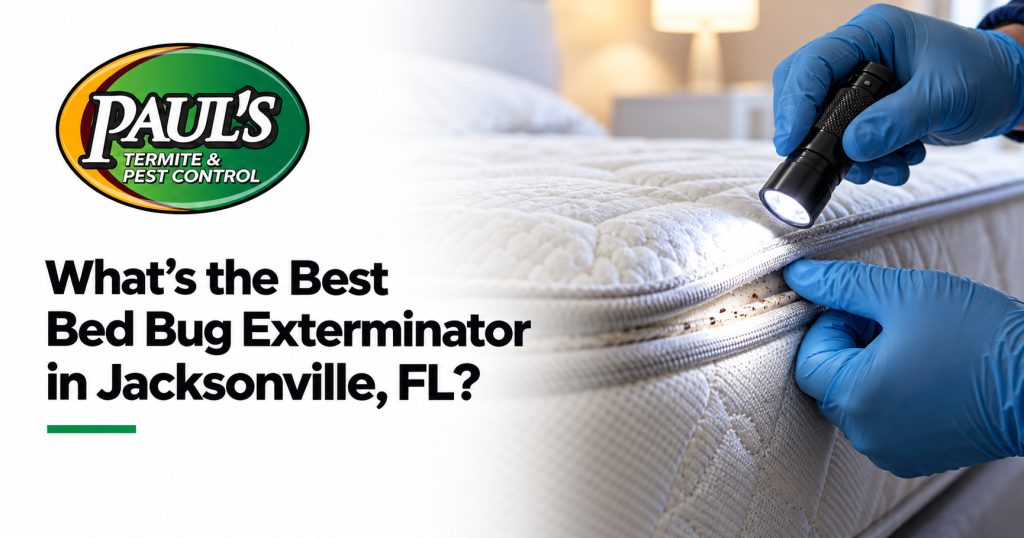
Quick Answer: The best bed bug exterminator is one that inspects the property before quoting, treats every life stage including eggs, and returns to verify the result. Bed bug eggs are not controlled by most over-the-counter products, so a plan without follow-up commonly fails within a few weeks. Inspection findings, rather than the size of […]
Smart Mosquito Control in Tallahassee for Late-Summer Cookouts
Enjoy Late-Summer Nights Without Mosquito Drama Late-summer cookouts in Tallahassee are supposed to feel easy. Warm nights, kids in the yard, something on the grill, and neighbors dropping by. Then the mosquitoes show up and everyone starts slapping, spraying, and sneaking back inside. You do not have to cancel your plans or spend the whole […]
How Do You Get Rid of Fire Ants in Your Florida Yard?
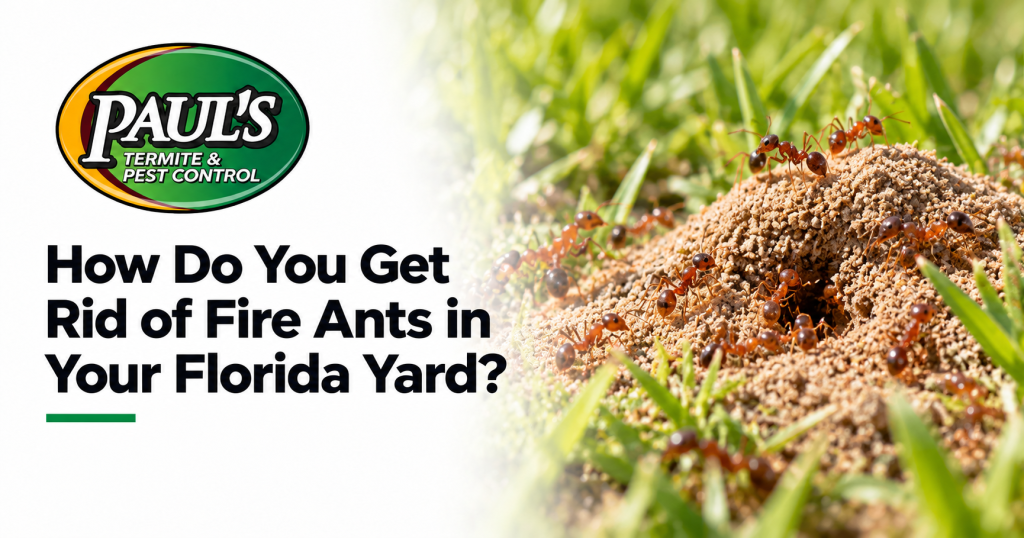
Quick Answer: The most effective way to get rid of fire ants is to treat the colony, not just the mound you see. For a few mounds, use individual mound treatments (baits, drenches, or dusts); for a yard full of them, broadcast a fire ant bait that workers carry back to the queen. Skip folk […]
How Do I Get Rid of Crickets In and Around My North Florida Home?
Quick Answer: Crickets wander indoors from the yard, drawn by lights and shelter, and tend to hide in garages, closets, and storage areas. They’re mostly a nuisance — the chirping and the occasional damage to fabrics — rather than a danger. Control them by reducing exterior attractants and harborage, sealing entry points, and treating the […]
When Should I Worry About Powderpost Beetles in My Home?
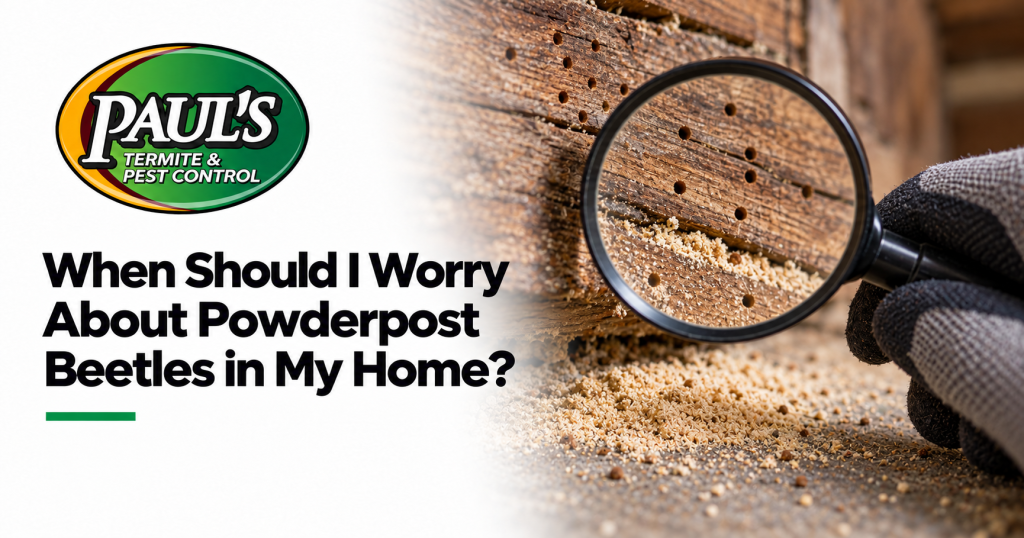
Quick Answer: Powderpost beetles bore into seasoned hardwoods and reduce the inside to a fine, flour-like powder, leaving tiny round “shot holes” on the surface. The key sign of an active problem is fresh powder appearing beneath new holes. Because they damage structural and finished wood slowly over time, it’s worth identifying and addressing them […]
Who Offers Eco-Friendly Pest Control in Jacksonville?
Quick Answer: Paul’s Termite & Pest Control offers environmentally responsible pest control in Jacksonville, using treatments designed so families and pets can stay home during service. For termites, Paul’s uses the Sentricon Colony Elimination System — targeted in-ground bait stations rather than tent fumigation. The company has served North Florida since 1971 and holds a […]
Is Eco-Friendly, Pet-Safe Pest Control Actually Effective in Florida?
Quick Answer: Yes — modern eco-friendly, pet-conscious pest control can be highly effective in Florida when it’s built on Integrated Pest Management (IPM). IPM focuses on prevention, inspection, sealing entry points, and targeted treatment of the spots where pests actually live, using pesticides judiciously rather than blanketing your home. Done right, it controls pests with […]
How Do I Keep Pests Off My Lanai, Pool Area, and Patio?
Quick Answer: Outdoor living areas attract pests because they combine moisture, food, lights, and shelter. Take back your lanai, pool, and patio by removing standing water, adjusting lighting, keeping the area clean and clutter-free, repairing screens, and trimming nearby vegetation — backed by recurring exterior treatment for mosquitoes and other yard pests during the warm […]
What Are the Most Common Household Pests in Jacksonville?
Quick Answer: The most common household pests in Jacksonville are ants, cockroaches, subterranean termites, mosquitoes, roof rats, spiders, and stinging insects such as wasps and hornets. Florida’s warm, humid climate means most of them stay active year-round rather than dying back over winter. Paul’s Termite & Pest Control has treated the full range of North […]
What Are the Most Common Household Pests in North Florida?
Quick Answer: The most common household pests in North Florida are ants (including ghost ants and fire ants), cockroaches (American “palmetto bugs” and German), rodents (house mice, roof rats, and Norway rats), termites (subterranean), and seasonal pests like mosquitoes, spiders, and stinging insects. Our warm, humid climate keeps most of them active much of the […]