| Quick Answer: To get rid of fleas and ticks in a Jacksonville yard, treat all three places they live at the same time: your pets (with a preventive from your veterinarian), your home (wash bedding and vacuum often) and your yard (mow, open up shady damp areas and treat where pets rest). Recurring yard treatment is what keeps them from coming back. Paul’s Termite & Pest Control offers recurring treatments in the Jacksonville area that target mosquitoes, fleas and ticks (904-913-8070). |
Fleas and ticks are a year-round problem in Jacksonville. Mild winters, high humidity and plenty of shade mean they never get a real off-season, and wildlife moving through neighborhoods keeps bringing new ones into yards. Most homeowners notice them through their pets first: scratching, a tick found during a cuddle, or bites around the ankles after time in the yard. This guide explains why fleas and ticks do so well in Jacksonville, where they hide, how to clear them, and how to keep them from coming back.
Why Are Fleas and Ticks So Common in Jacksonville?
Jacksonville’s climate is close to ideal for both. Fleas develop fastest in warm, humid conditions, and ticks survive best in shady, moist ground cover. Many Jacksonville yards have exactly that: mature oaks, thick landscaping, irrigated lawns and wooded edges. Raccoons, opossums, squirrels and stray cats then carry fleas and ticks from yard to yard, which is why a yard that was clear in spring can have a problem again by summer.
Where Do Fleas and Ticks Hide in a Jacksonville Yard?
- Shady, damp spots: under shrubs, decks and porches, where fleas avoid direct sun.
- Pet resting areas: dog runs, kennels and the cool spots your pets lie in.
- Tall grass and leaf litter: where ticks wait for a host to brush past.
- Wooded and brushy edges: the border between your lawn and natural areas.
- Crawl spaces and sheds: where wildlife carrying fleas may shelter.
What Is the Difference Between Fleas and Ticks?
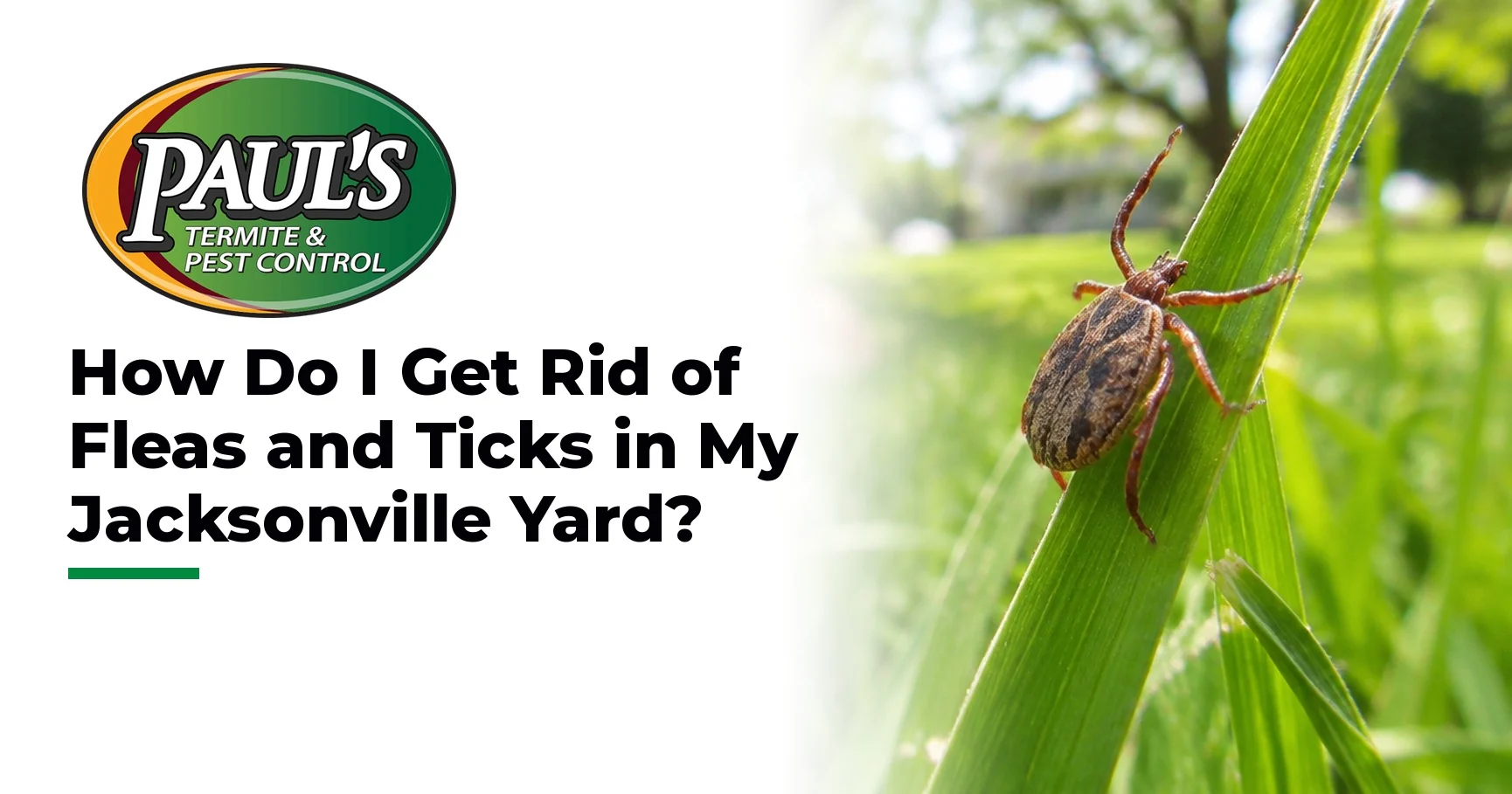
Fleas are tiny, wingless insects that jump. They live on a pet and lay eggs that fall off into carpets, bedding and the yard, so a single flea quickly becomes hundreds. Ticks are not insects but arachnids, related to spiders. They do not jump or fly. Instead they climb grass and brush and wait for a person or animal to brush past, then attach and feed for days. That difference shapes how you control them: fleas need treatment where eggs and larvae develop, while ticks need treatment of the tall grass, brush and edges where they wait.
Both are most active in the warm, humid months, but in Jacksonville neither truly disappears in winter. A warm week in January is enough to bring them out again.
Are Fleas and Ticks a Health Risk?
Yes, more than most people realize. According to the CDC, fleas can spread illnesses such as murine typhus and give pets tapeworms. Ticks are the bigger concern: in Florida they can spread diseases including Rocky Mountain spotted fever and ehrlichiosis. The CDC’s guidance on preventing tick bites covers checking for and removing ticks on people and pets. Check yourself, your children and your pets after time in grassy or wooded areas, and ask your doctor or vet about any bite that looks unusual.
How Do I Get Rid of Fleas and Ticks for Good?
Treating only one place is the most common reason fleas come back. Work on all three at the same time.
1. Treat your pets
Ask your veterinarian about a flea and tick preventive and use it all year, not just in summer. In Jacksonville’s climate, a gap of a few weeks is enough for fleas to return.
2. Treat your home
Flea eggs and larvae hide in carpet, bedding and furniture. Wash pet bedding and your own on hot, vacuum carpets, rugs and upholstery often, and empty the vacuum outside. Pay special attention to the places your pets sleep.
3. Treat your yard
- Mow regularly and keep grass short where pets play.
- Trim shrubs and remove leaf litter so sunlight reaches the ground.
- Fix leaks and avoid overwatering, since fleas and ticks prefer damp ground.
- Keep wildlife away by securing trash and pet food and sealing gaps under decks and sheds.
- Treat the shady areas and pet resting spots on a recurring schedule.
Does Professional Yard Treatment Help With Fleas and Ticks?
Yes. Store-bought yard sprays usually cover the open lawn and miss the shady, protected spots where fleas and ticks actually live. A professional treatment targets those areas and repeats on a schedule, which matters because new fleas keep hatching and wildlife keeps bringing more in.
Paul’s recurring treatments in the Jacksonville area target mosquitoes, fleas and ticks together. Our mosquito program runs every month from March through October, when pests are at their peak, and uses solutions that won’t expose your children and pets to harmful chemicals. Learn more about our mosquito control in Jacksonville or our wider pest control in Jacksonville.
When Should I Call a Professional?
Call for help if you are still seeing fleas two to three weeks after treating your pets and home, if ticks keep turning up on your family or pets after time in the yard, or if your yard backs onto woods or water where wildlife moves through. A recurring program is also worth it if you have several pets or children who spend a lot of time outdoors. Paul’s offers a free, no-commitment quote.
What If Wildlife Keeps Bringing Fleas Into My Yard?
If raccoons, opossums or squirrels are living under a deck, in a crawl space or in the attic, fleas will keep coming back no matter how often you treat. Removing the animals and closing the entry points fixes the source. Paul’s handles wildlife removal in Jacksonville, starting with an inspection and finishing by closing the entry points so the same route can’t be used again.
For more on the same problem across the state, see our guide to getting rid of fleas and ticks around a Florida home.
Frequently Asked Questions
When is flea and tick season in Jacksonville?
They are active most of the year because of Jacksonville’s mild winters and humidity. Activity is highest from spring through fall, which is why year-round pet preventives and recurring yard treatment work best.
Can I get rid of fleas just by treating my dog or cat?
Usually not. Most of a flea population lives as eggs and larvae in the yard and the home, so treat the pet, the house and the yard at the same time.
Are yard treatments safe for my pets?
Paul’s uses solutions that won’t expose your children and pets to harmful chemicals. Your technician will tell you if you should keep pets off a treated area until it dries.
How do I check for ticks after being outside?
Check your whole body, especially behind the knees, around the waist, under the arms and along the hairline, and check pets around the ears, neck and between the toes. Remove any tick promptly following CDC guidance.
Does Paul’s treat fleas and ticks in Jacksonville?
Yes. Paul’s recurring treatments target mosquitoes, fleas and ticks. Call 904-913-8070 for a free quote.
Summary
Fleas and ticks stay active most of the year in Jacksonville because of mild winters, humidity and plenty of shade. They live in three places at once, on pets, inside the home and in shady parts of the yard, so all three need treatment at the same time. Ticks in Florida can spread disease, which makes checking people and pets after time outdoors important. Recurring yard treatment and removing wildlife that brings fleas in are what keep the problem from coming back.
Ready to get started? Call Paul’s Termite & Pest Control at 904-913-8070 or request your free quote online.
Key Takeaways
- Fleas and ticks stay active most of the year in Jacksonville’s warm, humid climate.
- They hide in shady, damp spots, pet resting areas, tall grass and wooded edges.
- Ticks in Florida can spread diseases, so check people and pets after time outdoors.
- Treat pets, the home and the yard at the same time to break the cycle.
- Wildlife under decks or in attics keeps bringing fleas back until it is removed.
- Paul’s recurring treatments target mosquitoes, fleas and ticks. Request a free quote.